Countdown

Monday, August 3, 2015

Still a Log Home

This article was in The Patriot News, August 26, 1990. Thanks for sharing Ron Stine.


Wednesday, September 17, 2014

Monday, August 18, 2014

Mixell Restaurant, Linglestown

Thank you Laura Gifford for sharing this article


This article was in the Harrisburg Telegraph, November 2, 1918, page 2


Postcard picture of the restaurant and poolroom mentioned in the article above. The name is misspelled on the picture. The photo says that it is Pillville , Linglestown. Pillville was Larue street. It is believed that Mixell Restaurant was located on North Mountain Road at the end of Larue Street. If you know of the exact location, please let us know, linglestown250@yahoo.com.

Monday, August 4, 2014

The Story of the "White" Color of the Linglestown Fire Co. 1941 Ford Pumper

This post was written by Bill Minsker, Linglestown Fire Co. Historian           

           When the fire company decided to and was financially able to purchase its first new fire apparatus, a very basic question needed to be settled as to what color it should be.  Many members preferred the traditional -  but VERY difficult to see at night RED color.  Other members reasoned that a very non-traditional and rarely used WHITE color would be better, safer due to much better night visibility, and rather unique for the "new fire kids on the block" in the Harrisburg area.  ...so the story goes that at a Fire Company specially-called meeting on September 25, 1940, the vote was given of 18 for the white color, and 10 for red.  As a result, beginning with the new 1941 Ford pumper, all future apparatus of the Linglestown Fire Co. # 1, including all 11 current apparatus units, have been designated to have white color. 


Also in regard to “color” -   Each of the three L. P. Twp. fire companies has chosen a separate station color, to be used to designate and identify ownership of the many pieces of equipment carried on each company’s apparatus that is used for fire-fighting and other purposes.  The color designation for Colonial Park is GREEN, Paxtonia’s chosen color is RED, and the Linglestown color is BLUE.  In addition, all of the Township’s fire apparatus has reflective night-time safety Scotchlite tape in use on its vehicles, and these three colors are also used for this purpose.  Therefore, all 11 pieces of fire apparatus of the Linglestown Fire Co. have bold BLUE Scotchlite attached to its vehicles.


Sunday, July 6, 2014

January 20, 1937, Evening News


The sign mentioned in the article is still on the building today. (Linglestown Fire Station)


Monday, May 26, 2014

Horseshoers, As Told By Riley Hinkle

This post is taken from Linglestown PA Bi-Centennial commemorative book. As told by Riley Hinkle in 1965 about the last blacksmith shop in Linglestown.


    "I bought young Dan out, and he bought from Orris who rented from Reimert, and Aldinger had it before him. Young Dan learned his trade as horseshoer from Orris. At one time the shop changed hands so fast we can't remember just when each owned it. It was an old shop that was standing  there a hundred years. It was an old shop when I was a boy 75 years ago. It was finally torn down and Nevin Moyer's house was built on the spot. I closed up shop in 1923.

    When I learned the trade around 1900, some horseshoers were charging eight cents a piece to set a horseshoe, and it was $1.00 for four new shoes all around.  We did other work, all general repairs around a wagon and around farm implements.  There was hardly a day when I didn't set 48 shoes.  I grossed about $3500 a year.  I could shoe a quiet horse when I was 12 years old.  You could make a good living, but you didn't have any spare money so you could buy something fancy or even go anywhere on a trip.

    I suppose I was the last blacksmith in Linglestown.  There's still a blacksmith at Grantville, but he doesn't shoe any horses.

    In the fall of 1904 the street car came to Linglestown and it changed over to the bus in 1934.  Before 1904, the mail route was by a team of two horses and a wagon.  I didn't do any of the blacksmithing for them because they had their work done in Shellsville or Harrisburg."


Monday, April 28, 2014

Dates to be Remembered - Linglestown Fire Company

This post is taken from The 25th Anniversary of Linglestown Fire Company commemorative book. The anniversary was celebrated in June 1959.

1850 - Paxton Fire Company of Linglestown purchased first hand pumper which was pulled by men with ropes attached.

1898 - End of Paxton Fire Company. History of LInglestown by Nevin W. Moyer relates that the town's blacksmith turned the hand pumper into a very useful wagon for the purpose of hauling beer kegs at the local tavern.

FEBRUARY 28, 1934 - Rev. Elias H. Philips called for a town meeting to be held at the American Legion Home (formerly the chapel of the EUB Church) for the purpose of organizing a fire company.  The fire company was organized at this meeting and the fire chiefs elected to serve one year.

MARCH 22, 1935 - First fire truck purchased. This truck consisted of a Ford, Motel T, chassis with a centrifugal pump, ladders and a booster tank with hose reel. This fire truck was purchased used from the Elizabethville Fire Company, Elizabethville, PA.

APRIL 10, 1935 - First fire house was a garage in rear of Care's home on North Mountain Street located near the EUB Church. This building was torn down when the property was purchased by Clark Basehore.

DECEMBER 11, 1935 - Second fire house was a garage owned by Fleck Mixell, the town barber. 

FEBRUARY 10, 1937 - Linglestown School House purchased for permanent fire house. (Present site).

JULY 28, 1938 - Ladies Auxiliary of the fire company organized.

APRIL 12, 1939 - Lower Paxton Township Fireman's Relief Association organized.

DECEMBER 6, 1940 - New fire truck purchased. This fire truck consisted of a 95 HP Ford truck chassis with a 750 gallon per minute pump with all the other modern fire fighting accessories.

MARCH 9, 1955 - Two thousand gallon tank truck purchased and put into service by the fire company.

AUGUST 10, 1955 - Construction of the new wing to the fire house started to provide for three pieces of fire fighting equipment.

AUGUST 10, 1955 - First radio for communication purposes installed on pumper

NOVEMBER 14, 1956 - Dam constructed by fire company on Schradely property for fire protection  of Linglestown.

JULY 1, 1959 - Fire house officially dedicated for community service.


Friday, April 11, 2014

Great Damage in Linglestown - Hbg. Telegraph, Wed. Sept. 30, 1896


This is just the Linglestown section-the whole article took up the entire front page.
Thank you Laura Gifford for sending this article.

Sunday, April 6, 2014

History of the Ladies Auxiliary of the Linglestown Fire Company

The following post is from The 25th Anniversary of Linglestown Fire Company commemorative book. The anniversary was celebrated in June 1959.

On July 25, 1938 the following ladies met in the fire house to organize an auxiliary to the Fire Company. 


                                                 Mrs. Milton Allen      
                                                 Mrs. Herman Allen 
                                                 Mrs Ezra Care
                                                 Mrs. Edward Deibler
                                                 Mrs. Carlton Gardner 
                                                 Mrs. John Snyder 
                                                 Mrs. Paul Zimmerman 
                                                 Mrs. Ellen Light

The purpose of the organization was to promote and encourage civic activities among the women of the community and to assist the Fire Company, within their financial ability, in making improvements as needed to the fire house.

At this first meeting the following officers were elected:

                            President---------------------------Mrs. Paul Zimmerman
                            Vice President--------------------Mrs. David Nye
                            Recording Secretary------------Mrs. E. Victor Light
                            Financial Secretary--------------Mrs. Mrs. Carlton Gardner
                            Treasurer---------------------------Mrs. Herman Allen
                            Chaplain----------------------------Mrs. Milton Allen

Also at this meeting the Auxiliary established a charge to be made for membership of $.25 with dues at $.10 per month.

December 31, 1938 the records of the Auxiliary showed 63 active members.
Dues were established at $1.00 per year during 1939.

Auxiliary held a picnic on July 26, 1939, at Piketown to celebrate their first anniversary. All the firemen were invited.

Auxiliary paid the cost of installing water system in fire house in 1939.
Auxiliary held their first covered dish supper in1940.
Auxiliary entered parade as a marching group during the 175th Anniversary Celebration of the founding of Linglestown held August 1940.
Purchased an American flag for meeting room in 1941.
First deceased member of the Auxiliary, Mrs. Riley Hinkle, reported  in minutes of 1941.
Purchased service flag in 1942. Original service flag had 7 stars with more added later.
Auxiliary presented a gift to all firemen when they entered the Armed Forces beginning 1942.
Auxiliary set up a casualty station in the fire house in 1942.
Auxiliary printed first birthday calendars in 1944.
Through the efforts of the Auxiliary, the Community Garden Club of Linglestown was founded in 1944.
Auxiliary had a contest among its members which ran from April 1943 to April 1944 and raised a total of $2,500.
Service plaque purchased for the fire company in 1945. Service plaque had 72 names with one gold star.
Auxiliary sponsored a Girl Scout Troop in1949.
New ceiling in meeting room was paid for by the Auxiliary in 1951.
Auxiliary had a new tile floor laid in meeting room in 1952.
Auxiliary made first cancer dressings for the Cancer Society in 1954.
Auxiliary paid $500 towards the purchase of the tanker.
Auxiliary purchased bronze memorial to pay tribute to the firemen and members of the Auxiliary upon their death. Purchased in 1955 at a cost of $256.
Auxiliary paid $2,850 for new heating plant in 1955.
Auxiliary paid $400 towards the purchase of the portable light plant carried on fire truck. Purchased in 1958.
Auxiliary purchased five dozen folding chairs for meeting room in February 1959.
Auxiliary purchased new blinds for windows in the meeting room as well as the paint used to  repaint the meeting room in March 1959.

The Auxiliary is still active today.


Monday, March 17, 2014

History of Linglestown Fire Company - Part 3

The following post is from The 25th Anniversary of Linglestown Fire Company commemorative book. The anniversary was celebrated in June 1959.

The older firemen often relate the incident of the fire at the Regal Farm, located at the intersection of Route 39 and the road to Piketown at Beaver Creek, when the chicken house and later the house caught fire.  This fire occurred sometime after the Model T Pumper had been purchased, and the Linglestown Fire Company was still an unrecognized fire company.  However, the location of the fire unknown to the people of Linglestown, fire companies from Harrisburg. Penbrook and Progress came through the town blowing sirens and heading to the fire. The local firemen could not understand why their company was not called and they waited hoping someone would put a call through for them to respond to the fire. After about one half hour the fellows agreed they would go and see if they could be of any help.

When the Linglestown Fire Company arrived at the fire, the chicken house was already burned down and the house had caught fire.  Having some experience of pumping from streams, the Linglestown boys pulled up on the bridge, dropped the suction hose in the creek, connected up the 2 1/2" hose and started towards the house. As our boys started spraying water on the house, one of the members of the Camp Curtin Fire Company of Harrisburg said " Here I  will take the hose" and our boys said, "This is Linglestown's line, your pumper is down at the creek trying to pump water and can't". It is unfortunate that the Linglestown Fire Company was not called earlier, since through the efforts of the Linglestown Fire Company the house was saved from total destruction. No water was put on the fire prior to the arrival of the Linglestown Fire Company. From this time on, the Linglestown Fire Company was respected among all the other nearby fire companies as well as the citizens of the community when they heard the good work the Linglestown men did when they got into action.


This was published in 1959 so it was 1940 - 1959


The fire company at no time ever lacked drivers and volunteers when a fire call was received except during World War II, year of 1945. Many of the men of the community were called up for service and the older men were employed in defense plants and at military installations. There was a discussion as to the merits of teaching some of the women of the community how to drive the truck and to respond to alarms, especially during daylight hours.   However, the war ended in August 1945 and this situation soon adjusted itself when the boys returned home from the war.


Monday, February 17, 2014

Theft in Linglestown

This is an article from "The Evening News". We do not have the date. If you know the date, please let us know.  Thank you Esther and Sonny Bretherick for sharing this.

Carls Auto Body Shop is still in business on N. Mountain Rd.


Wednesday, February 5, 2014

History of Linglestown Fire Company - Part 2

The following post is from The 25th Anniversary of Linglestown Fire Company commemorative book. The anniversary was celebrated in June 1959.

During the year of 1900, the people of the community again tried to start a new fire company. A festival was held in Zimmerman's Hall to raise money to purchase chemical fire extinguishers. A net profit of $60.00 was realized from the festival and 12 fire extinguishers were purchased and distributed in various stores and homes in the community. The purchase of the fire extinguishers was the last that was recorded of this effort to organize a fire company.


On November 28, 1922, the homes of Mrs Carrie Feeser and Austin Schaner burned down and again a fire company was organized but it never went any further than the organization stage.

In February, 1934, a barn of Charles Reimert located in Linglestown burned down with the loss of two horses, in addition to the barn.  From approximately 1890 until the founding of the Linglestown Fire Company No. 1 in February 1934 it was always necessary to call Harrisburg to receive help to fight the fires in Linglestown. Later, when Penbrook and Progress Fire Companies were organized, they were called when help was needed.  However, due to communication services, a lot of time was lost when equipment had to come from Harrisburg, Penbrook and Progress. It was the Charles Reimert fire that caused great excitement and showed the people of the community the need of an organized fire company. Through the efforts of the Rev. Elias H. Phillips, minister of the Reformed Church, a call went out to the men of the community for a meeting to be held at the American Legion Hall(presently the Chapel of the EUB Church) {Chapel is no longer standing-ed} for the purpose of organizing a fire company. This meeting was held at 7:30 P.M. on February 28, 1934.
Chapel that was later the American Legion Hall .
Located north of the square across from the EUB Church.

Like the old Paxton Fire Company, the new organization called the Linglestown Fire Company, was also received by the people of the community with approval and criticism. Some thought that the new organization would die like the other companies the community tried to organize throughout the years. However, this group of men were determined. The first equipment used, if necessary, was to be buckets, hand fire extinguishers and ladders, the type that could be found in any person's home.

Meetings of the new fire company were held each month in the American Legion Hall, with the men of the fire company determined that this new company would not die. Various activities were held by the fire company during the year to raise funds in order to purchase a motorized piece of equipment. In 1935, the happy day arrived when the Ford, Model T fire truck was purchased from the Elizabethville Fire Company. From that day on, the community began to support the fire company and the membership grew rapidly. The men of the fire company, periodically would take the fire truck  down to Beaver Creek and practice pumping from the creek. As the fire company became known, and twenty-four hour service for fire calls was furnished by Zimmerman's Home for Funerals, the company received many fire calls .


...to be continued...


Sunday, January 19, 2014

You Ate What ?

Laura Gifford and Denise Diemlier, members of Linglestown 250th Committee, have been working many hours researching Linglestown property owners and looking for interesting stories to go in the 250th Commemorative Book. They came across this interesting article published in the 1960's. We think it was in The Paxton Herald. 

The lady, Mrs. Edna Horting, in this article is Denise's Grandmother.


Sunday, January 12, 2014

History of the Fire Companies of Linglestown

The following post is from The 25th Anniversary of Linglestown Fire Company commemorative book. The anniversary was celebrated in June 1959.
A special thanks to Louden (Sonny) and Esther Bretherick for sharing their book with us.


Part 1 


We are not sure when the first Fire Company was organized in Linglestown, but we do know from the History of Linglestown compiled by Nevin W. Moyer, that in 1850 a hand pumper was purchased from the Hummelstown Fire Company No.1 by the Paxton Fire Company of Linglestown.  Mr. Moyer's history relates that the pumper had the date of 1805 inscribed on it. He also records that this fire engine was pulled by hand by approximately 100 men from Hummelstown to Linglestown.

This first pumper was a water box with a hand operated pump. The water box was filled by a bucket brigade formed by both men and woman and pumped up through a metal spout which could be turned in any direction desired.  This fire apparatus was received with much admiration and criticism.


Some of the citizens were skeptical as to the effectiveness of this hand pumper but a demonstration at the home of one of the honored families of the community, Peter Heckert, Sr., residing on North Mountain Road, convinced the critics.  It is recorded that Mr. Heckert offered the fire company $5.00 for every brick the firemen could knock off his chimney with a stream of water.  The fireman accepted his offer and started to work. After pumping for some time the first brick tumbled, then another and another.  Mr. Heckert hurriedly ran into the house, came out waving $15.00 and asked the fireman to stop.  After this demonstration the fire company was accepted into the community.  This fire company due to inactivity, existed until about 1890. There was only one large fire of record which this company fought. This was in 1860 when the Aungst Undertaking Shop caught fire. The establishment was located at the present site of the Zimmerman Home for Funerals (now Hoover Funeral Home - ed.).  

The story is told how the boys of the town would sneak the old fire engine out of the firehouse on the 4th of July and on Halloween and pull the truck up and down the town yelling  like Indians and ring the bells.  Dr. W.C. Smith, who was recorded as being the president of the fire company, would chase after the boys, and since the boys became scared and would run away, it became necessary for the doctor to pull the fire engine back to the station with the aid of a few men he could muster from the village tavern to give him a hand.

In about 1898, the keeper of the Eagle Hotel of Linglestown, in some way secured this fire engine, and had the village blacksmith cut it down and use the wheels and part of the body to make a rig to haul beer kegs, ice, etc for the hotel.

Sunday, December 15, 2013

Street Names of Linglestown

The following post was researched and written by Laura Gifford. Laura is a member of the Linglestown's Sestercentennial Committee.

In preparation for our sestercentennial, research has begun tracing the ownership of the original lots laid out by Thomas Lingle and three extensions of Linglestown using deeds.  This research has led to some interesting discoveries regarding the names of the roads in Linglestown.

Most of the roads have been around for as long as Linglestown has, but their names have changed over time.  Linglestown Road was originally named Market Street by Thomas Lingle.  Then, as now, this road extended well beyond Linglestown and was thus sometimes described as the road to Harrisburg, to the river, or to Fort Hunter. 


Blue Mountain Parkway was variously known as the road to Daniel Reem’s Stillroom or Mountain Alley.  

Linglestown Road and Blue Mountain Parkway *click to enlarge*

North Mountain Rd was called Mountain Street by Thomas Lingle, but was also called Front Street (1863), Main Street(1889), the road to Paxtonia, and confusingly also the road to Harrisburg.  The earliest use of North Mountain Road I’ve found is in 1963.  This road has been a public road since at least 1818; by 1926 it was part of state routes – Route 140 and then by 1941 Route 834. 


North Mountain Road. Note the trolley track on the right.


The western side of LaRue Street is the older part of this road.  It was originally named Walnut Street and the part closest to North Mountain Road was divided into lots in the early 1860s.  
Larue Street, Avis Lane, and Amber Street. *click to enlarge*

Avis Lane was around by then and was originally known as Penn Alley or Avenue.  The name change to Avis Lane appears to have occurred between 1960 and 1965.    

Finally, Amber Street, a street most of us have never encountered has had two other names – Branch Street, beginning by 1863, and Short Avenue.


Sunday, November 17, 2013

Linglestown's Famous Past

Many famous people throughout history have lived in Linglestown at one time in their life or they had forefathers who lived here.

The following people can all trace their ancestors back to Linglestown.

Lindley Murray: wrote the first English grammar book in America.

Lindley Murray


William Darby, English geographer and Rev. William Graham: founder of Washington and Lee University.

Major General George Barnett, head of the United States Marines during World War 1 was a descendant of the Barnett family. The Barnett's sold the land on which Linglestown is located, to Thomas Lingle.


James Buchanan, 15th President of the United States (1857-1861), could trace his family back to Rev. James Buchanan and wife.  Rev. Buchanan's wife was born in Linglestown. 

President James Buchanan


Three of President Dwight Eisenhower's ancestors lived in Linglestown, and are buried in Wenrich's cemetery at St Thomas United Church of Christ.


President Dwight D. Eisenhower

John Eisenhower was the half brother of the great-great-grandfather of the 34th President.  John's wife, Catherine Planck, is buried next to him.  She is the daughter of Jacob Planck, a signer of the deed to the church property.  St Thomas UCC has a copy of an extensive Eisenhower genealogy.


Old Log House on the Unger Farm west of Linglestown (1967) .
This was the  homestead of the Peter Eisenhower family
who were the ancestors of President Eisenhower.


John Eisenhower's grave
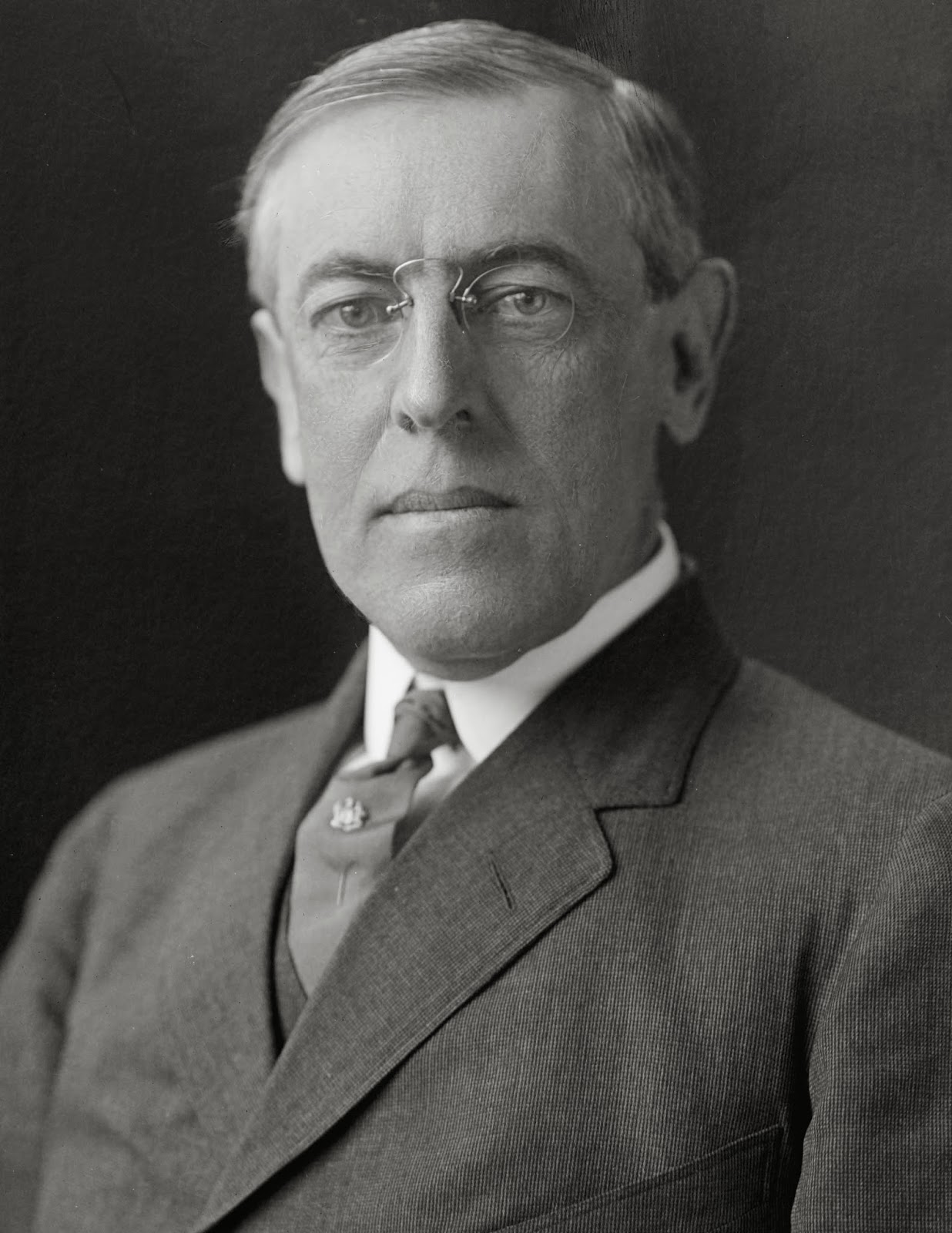
Some of the forefathers of President Woodrow Wilson lived on the outskirts of Linglestown.


President Woodrow Wilson
Archibald Roan, son of Rev. Roan (a pastor at Wenrich's) became the second Governor of Tennessee.

Peter Bonavitz sold his land in Linglestown to Evangelical Brethren Church (now Linglestown Life Church) moved west and later became Governor of Iowa. His son became a senator there.


Archibald Roan

Governor David R. Porter of Pennsylvania (1839 -1845) owned a farm two miles west of Linglestown. 

Governor David R. Porter

Governor John Fisher of Pennsylvania (1927-1931) was related to the Thomas Lingle family.


Governor John Fisher
Henry Horner, former Governor of Illinios (1933-1940) and Alexander Ramsey, former Governor of Minnesota(1879-1881) had forefathers who lived in Linglestown.

Information for this post is from Lower Paxton Township Bi-Centennial Book and St Thomas UCC website.

Sunday, September 29, 2013

Schools of Linglestown

In 1720 the first school in town was built in combination with the the first church at Wenrich's, now St. Thomas UCC. It was a one story log building located a half a mile east of Linglestown. The building had a church and school in one half and a home for the minister and teacher in the other half. It was called Wenrich's Parochial School.

Wenrich's Parochial School


Wenrich's Parochial School was used until 1790 when the students were then moved to the The Town of St. Thomas Log School. The Log School was twenty feet wide and twenty feet long and stood on the eastern part of town. On the north side of the building were two windows and the desks for the male students. The door, teacher's desk and window were on the east side of the classroom. On the south end was one window, and log seats and desks for the female students.  The west end had two windows, a long bench against the wall, and bench and desk for the big boys. A ten plate stove was in the center of the room and a small space up front for a blackboard. The windows were chin high so that the pupils couldn't look out. The students attended the log school until 1843.

The log school was built before the days of the free schools as we know them. The teacher was paid a penny a day for each pupil by the parents. If the parents could not pay then it was paid by the poor house. School attendance was not compulsory in those days.


In 1843 the students moved to a new school on the northern hill above Linglestown. Because of its location it was named the Hill School. The building was forty feet long and thirty feet wide. At one time it had one hundred students. Mr. Charles Mytinger was the teacher and was paid twenty dollars a month for four months of teaching each year. This school was also used for church purposes. 


The Hill School became so crowded in 1851 a duplicate school building was constructed east of the town on the Joseph Meese farm. The school had two names: The Locust Hill School or Meese School. The students who lived in the east end of town went to the Locust Hill School and those who lived in the west part of town went to the Hill School. 

An incident happened at the Locust Hill School.  When a teacher demanded that a girl student, who was much heavier and larger than he was, do a certain lesson, she refused. He was going to force her to do it so she took her small slate board and hit him over the head with it. The slate broke and the frame of the slate hung around the teacher's neck. The girl left school and ran home, never to return.

In 1879, when the Locust Hill School closed, the Mt. Zion School opened.  The school was located on the Meese farm, directly south of the Locust Hill School. It was thirty feet long and twenty feet wide. The school had all new furniture, desks for two with drop lids and folding seats, plaster blackboards all around the room, and two clothes closets. The school cost $727.00 to build and furnish.


Mt Zion School


After the Hill School was closed in 1859, the students were transferred to a new brick school which had been recently built. One of the teachers there,  Mr. Joseph Eichelhart, was especially liked by the children and their parents. When he came to Linglestown to teach, he brought wooden handled jumping ropes for the girls and was the first to introduce the game of football to Linglestown.

In 1876, construction began on the Linglestown High School building. It was built at the west end of Linglestown. There were three sections taught at this school: primary, intermediate and secondary education. The secondary school was established in 1910, composed of a two year course. The first graduating class in 1912 had six members. The brick building was used until 1931 when it became the location of the Linglestown Fire Company.


Lillie Pitman was the teacher at Linglestown High School
in 1921.  The pump was just outside the door and it was a
student's chore to bring in a pale of water each day for
watering the plants and washing the slate chalk boards.

One of the earlier graduating classes of the Linglestown High
School.  Seated: Bertha Rabrich, Ella Good, Sarah Schreiner,
standing: Irene Hershey, Boyd Good, Eva Daniel, Professor
William Weills and Dorothy Frese.


Teacher's Contract

Many times, when a teacher offered his services, he would draw up a contract to be agreed upon by the parents of the children he was to teach. Here is an example of a contract used by a teacher:

"George W. DuMars proposed to teach a regular English School three months at Light's School, consisting of the following branches: spelling, reading, writing and arithmetic if necessary. We, the subscribers, promise to pay the said, G.W. DuMars, for the above services, two dollars per scholar, annexed to our name, with fire wood and school house, for said term. None subscribers will be required to pay three cents per day. School will commence on the first Monday of December, next." Subscription dated, October 12, 1832. About thirty persons signed this pledge.


In 1922 the Lower Paxton Township Public School was opened. For many years all the students in the Township went to this school. In later years, the elementary and senior high school students went to newly constructed schools.


Merit System

Teaching and the running of the classroom was different in many ways than the way it is done today.  The merit system was used in the Mt. Zion School. Reciting was very important then and the "move to the head of the class system" was used. The more correct answers a student had in a row, the closer he/she came to the front of the class. If he/she made a mistake,  he went to the rear to begin again. The person who was at the head of the class at the end of each week would receive a merit card recognizing this fact.


Apparel

The Boys wore homemade boots and the girls wore homemade cow hide shoes, greased with hot tallow. The girls also had hand warmers, heavy long underwear and long, woolen stockings in the winter.


Books and Equipment

There was different equipment used in the schools.  Raubs Reader, Mitchell's Geography, Buckwalter's Speller and different arithmetic and grammar books were used. Many large wall maps, charts on tripods and globes were used.


Games

Many games were played at recess, most of which have now been forgotten. Paddleball, sock about, rabbit, old sow, kick the wicket, carley over, whip cracker, hind-most-three, see-saw, fox in the morning, rolling whoops, shooting marbles, building snowman, and snowball battles are an example.


Punishments 

Many different types of punishments were used in the schools. Some examples of these are spanking, staying in at recess and standing on a round stick in a corner, with one hand held high.


Schools of Higher Education

There were two institutions of higher education in early Lower Paxton Township. The first was called the Log College and was located a mile south of Paxtonia. The second one was located in Linglestown at the eastern end.  It was called St. Thomas Institute, a three-story building. The institute was opened in 1856 by Professor John Focht, for a term of six weeks. Students were charged three dollars for each term. The school operated for a number of years, graduating many future professional people. The students came from many surrounding counties. The building is now a home and can be seen at 6073 Linglestown Rd.


Information for this post is from the Lower Paxton Twp. Bi-Centennial book.