Countdown

Sunday, January 19, 2014

You Ate What ?

Laura Gifford and Denise Diemlier, members of Linglestown 250th Committee, have been working many hours researching Linglestown property owners and looking for interesting stories to go in the 250th Commemorative Book. They came across this interesting article published in the 1960's. We think it was in The Paxton Herald. 

The lady, Mrs. Edna Horting, in this article is Denise's Grandmother.


Sunday, January 12, 2014

History of the Fire Companies of Linglestown

The following post is from The 25th Anniversary of Linglestown Fire Company commemorative book. The anniversary was celebrated in June 1959.
A special thanks to Louden (Sonny) and Esther Bretherick for sharing their book with us.


Part 1 


We are not sure when the first Fire Company was organized in Linglestown, but we do know from the History of Linglestown compiled by Nevin W. Moyer, that in 1850 a hand pumper was purchased from the Hummelstown Fire Company No.1 by the Paxton Fire Company of Linglestown.  Mr. Moyer's history relates that the pumper had the date of 1805 inscribed on it. He also records that this fire engine was pulled by hand by approximately 100 men from Hummelstown to Linglestown.

This first pumper was a water box with a hand operated pump. The water box was filled by a bucket brigade formed by both men and woman and pumped up through a metal spout which could be turned in any direction desired.  This fire apparatus was received with much admiration and criticism.


Some of the citizens were skeptical as to the effectiveness of this hand pumper but a demonstration at the home of one of the honored families of the community, Peter Heckert, Sr., residing on North Mountain Road, convinced the critics.  It is recorded that Mr. Heckert offered the fire company $5.00 for every brick the firemen could knock off his chimney with a stream of water.  The fireman accepted his offer and started to work. After pumping for some time the first brick tumbled, then another and another.  Mr. Heckert hurriedly ran into the house, came out waving $15.00 and asked the fireman to stop.  After this demonstration the fire company was accepted into the community.  This fire company due to inactivity, existed until about 1890. There was only one large fire of record which this company fought. This was in 1860 when the Aungst Undertaking Shop caught fire. The establishment was located at the present site of the Zimmerman Home for Funerals (now Hoover Funeral Home - ed.).  

The story is told how the boys of the town would sneak the old fire engine out of the firehouse on the 4th of July and on Halloween and pull the truck up and down the town yelling  like Indians and ring the bells.  Dr. W.C. Smith, who was recorded as being the president of the fire company, would chase after the boys, and since the boys became scared and would run away, it became necessary for the doctor to pull the fire engine back to the station with the aid of a few men he could muster from the village tavern to give him a hand.

In about 1898, the keeper of the Eagle Hotel of Linglestown, in some way secured this fire engine, and had the village blacksmith cut it down and use the wheels and part of the body to make a rig to haul beer kegs, ice, etc for the hotel.

Sunday, December 15, 2013

Street Names of Linglestown

The following post was researched and written by Laura Gifford. Laura is a member of the Linglestown's Sestercentennial Committee.

In preparation for our sestercentennial, research has begun tracing the ownership of the original lots laid out by Thomas Lingle and three extensions of Linglestown using deeds.  This research has led to some interesting discoveries regarding the names of the roads in Linglestown.

Most of the roads have been around for as long as Linglestown has, but their names have changed over time.  Linglestown Road was originally named Market Street by Thomas Lingle.  Then, as now, this road extended well beyond Linglestown and was thus sometimes described as the road to Harrisburg, to the river, or to Fort Hunter. 


Blue Mountain Parkway was variously known as the road to Daniel Reem’s Stillroom or Mountain Alley.  

Linglestown Road and Blue Mountain Parkway *click to enlarge*

North Mountain Rd was called Mountain Street by Thomas Lingle, but was also called Front Street (1863), Main Street(1889), the road to Paxtonia, and confusingly also the road to Harrisburg.  The earliest use of North Mountain Road I’ve found is in 1963.  This road has been a public road since at least 1818; by 1926 it was part of state routes – Route 140 and then by 1941 Route 834. 


North Mountain Road. Note the trolley track on the right.


The western side of LaRue Street is the older part of this road.  It was originally named Walnut Street and the part closest to North Mountain Road was divided into lots in the early 1860s.  
Larue Street, Avis Lane, and Amber Street. *click to enlarge*

Avis Lane was around by then and was originally known as Penn Alley or Avenue.  The name change to Avis Lane appears to have occurred between 1960 and 1965.    

Finally, Amber Street, a street most of us have never encountered has had two other names – Branch Street, beginning by 1863, and Short Avenue.


Sunday, November 17, 2013

Linglestown's Famous Past

Many famous people throughout history have lived in Linglestown at one time in their life or they had forefathers who lived here.

The following people can all trace their ancestors back to Linglestown.

Lindley Murray: wrote the first English grammar book in America.

Lindley Murray


William Darby, English geographer and Rev. William Graham: founder of Washington and Lee University.

Major General George Barnett, head of the United States Marines during World War 1 was a descendant of the Barnett family. The Barnett's sold the land on which Linglestown is located, to Thomas Lingle.


James Buchanan, 15th President of the United States (1857-1861), could trace his family back to Rev. James Buchanan and wife.  Rev. Buchanan's wife was born in Linglestown. 

President James Buchanan


Three of President Dwight Eisenhower's ancestors lived in Linglestown, and are buried in Wenrich's cemetery at St Thomas United Church of Christ.


President Dwight D. Eisenhower

John Eisenhower was the half brother of the great-great-grandfather of the 34th President.  John's wife, Catherine Planck, is buried next to him.  She is the daughter of Jacob Planck, a signer of the deed to the church property.  St Thomas UCC has a copy of an extensive Eisenhower genealogy.


Old Log House on the Unger Farm west of Linglestown (1967) .
This was the  homestead of the Peter Eisenhower family
who were the ancestors of President Eisenhower.


John Eisenhower's grave
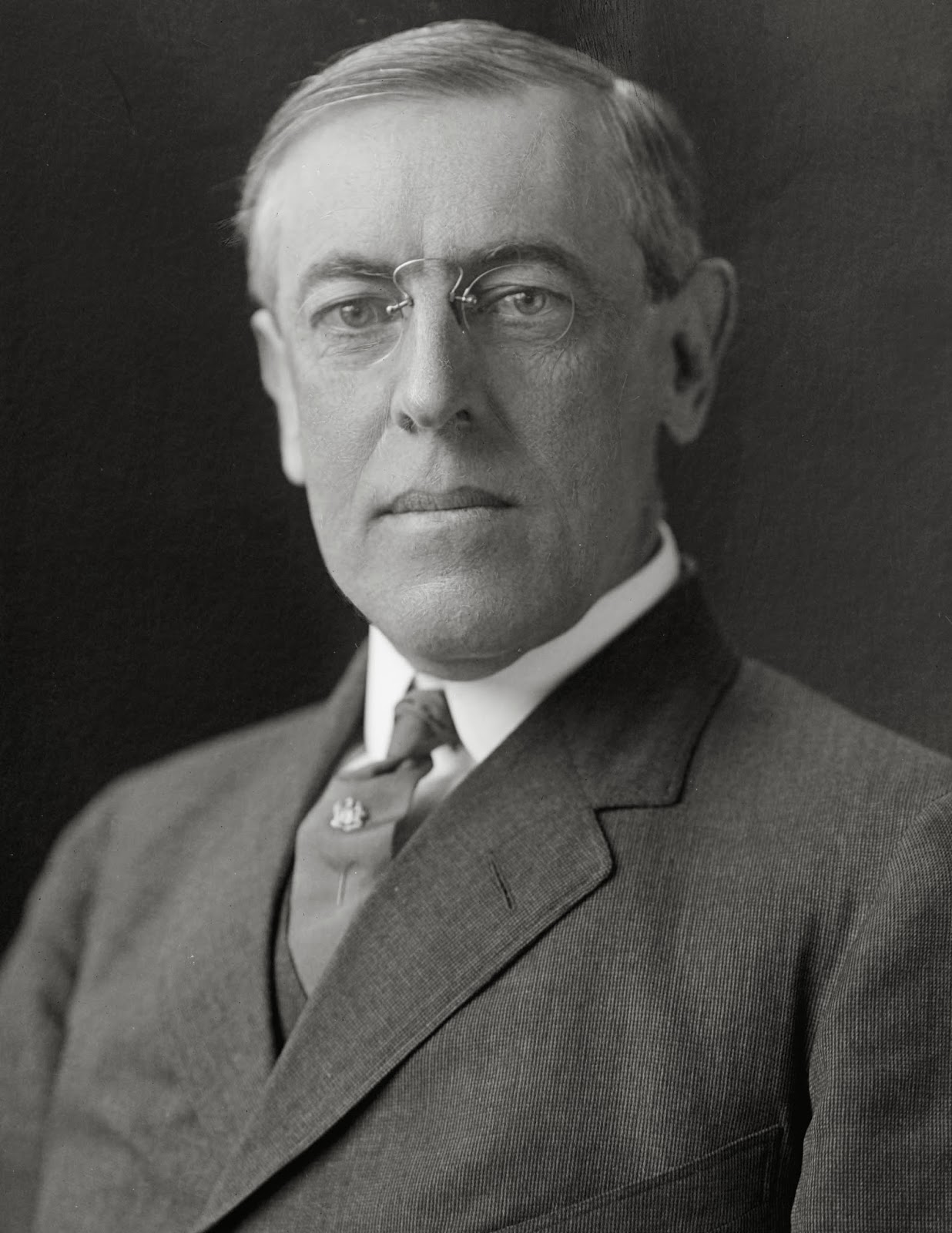
Some of the forefathers of President Woodrow Wilson lived on the outskirts of Linglestown.


President Woodrow Wilson
Archibald Roan, son of Rev. Roan (a pastor at Wenrich's) became the second Governor of Tennessee.

Peter Bonavitz sold his land in Linglestown to Evangelical Brethren Church (now Linglestown Life Church) moved west and later became Governor of Iowa. His son became a senator there.


Archibald Roan

Governor David R. Porter of Pennsylvania (1839 -1845) owned a farm two miles west of Linglestown. 

Governor David R. Porter

Governor John Fisher of Pennsylvania (1927-1931) was related to the Thomas Lingle family.


Governor John Fisher
Henry Horner, former Governor of Illinios (1933-1940) and Alexander Ramsey, former Governor of Minnesota(1879-1881) had forefathers who lived in Linglestown.

Information for this post is from Lower Paxton Township Bi-Centennial Book and St Thomas UCC website.

Sunday, September 29, 2013

Schools of Linglestown

In 1720 the first school in town was built in combination with the the first church at Wenrich's, now St. Thomas UCC. It was a one story log building located a half a mile east of Linglestown. The building had a church and school in one half and a home for the minister and teacher in the other half. It was called Wenrich's Parochial School.

Wenrich's Parochial School


Wenrich's Parochial School was used until 1790 when the students were then moved to the The Town of St. Thomas Log School. The Log School was twenty feet wide and twenty feet long and stood on the eastern part of town. On the north side of the building were two windows and the desks for the male students. The door, teacher's desk and window were on the east side of the classroom. On the south end was one window, and log seats and desks for the female students.  The west end had two windows, a long bench against the wall, and bench and desk for the big boys. A ten plate stove was in the center of the room and a small space up front for a blackboard. The windows were chin high so that the pupils couldn't look out. The students attended the log school until 1843.

The log school was built before the days of the free schools as we know them. The teacher was paid a penny a day for each pupil by the parents. If the parents could not pay then it was paid by the poor house. School attendance was not compulsory in those days.


In 1843 the students moved to a new school on the northern hill above Linglestown. Because of its location it was named the Hill School. The building was forty feet long and thirty feet wide. At one time it had one hundred students. Mr. Charles Mytinger was the teacher and was paid twenty dollars a month for four months of teaching each year. This school was also used for church purposes. 


The Hill School became so crowded in 1851 a duplicate school building was constructed east of the town on the Joseph Meese farm. The school had two names: The Locust Hill School or Meese School. The students who lived in the east end of town went to the Locust Hill School and those who lived in the west part of town went to the Hill School. 

An incident happened at the Locust Hill School.  When a teacher demanded that a girl student, who was much heavier and larger than he was, do a certain lesson, she refused. He was going to force her to do it so she took her small slate board and hit him over the head with it. The slate broke and the frame of the slate hung around the teacher's neck. The girl left school and ran home, never to return.

In 1879, when the Locust Hill School closed, the Mt. Zion School opened.  The school was located on the Meese farm, directly south of the Locust Hill School. It was thirty feet long and twenty feet wide. The school had all new furniture, desks for two with drop lids and folding seats, plaster blackboards all around the room, and two clothes closets. The school cost $727.00 to build and furnish.


Mt Zion School


After the Hill School was closed in 1859, the students were transferred to a new brick school which had been recently built. One of the teachers there,  Mr. Joseph Eichelhart, was especially liked by the children and their parents. When he came to Linglestown to teach, he brought wooden handled jumping ropes for the girls and was the first to introduce the game of football to Linglestown.

In 1876, construction began on the Linglestown High School building. It was built at the west end of Linglestown. There were three sections taught at this school: primary, intermediate and secondary education. The secondary school was established in 1910, composed of a two year course. The first graduating class in 1912 had six members. The brick building was used until 1931 when it became the location of the Linglestown Fire Company.


Lillie Pitman was the teacher at Linglestown High School
in 1921.  The pump was just outside the door and it was a
student's chore to bring in a pale of water each day for
watering the plants and washing the slate chalk boards.

One of the earlier graduating classes of the Linglestown High
School.  Seated: Bertha Rabrich, Ella Good, Sarah Schreiner,
standing: Irene Hershey, Boyd Good, Eva Daniel, Professor
William Weills and Dorothy Frese.


Teacher's Contract

Many times, when a teacher offered his services, he would draw up a contract to be agreed upon by the parents of the children he was to teach. Here is an example of a contract used by a teacher:

"George W. DuMars proposed to teach a regular English School three months at Light's School, consisting of the following branches: spelling, reading, writing and arithmetic if necessary. We, the subscribers, promise to pay the said, G.W. DuMars, for the above services, two dollars per scholar, annexed to our name, with fire wood and school house, for said term. None subscribers will be required to pay three cents per day. School will commence on the first Monday of December, next." Subscription dated, October 12, 1832. About thirty persons signed this pledge.


In 1922 the Lower Paxton Township Public School was opened. For many years all the students in the Township went to this school. In later years, the elementary and senior high school students went to newly constructed schools.


Merit System

Teaching and the running of the classroom was different in many ways than the way it is done today.  The merit system was used in the Mt. Zion School. Reciting was very important then and the "move to the head of the class system" was used. The more correct answers a student had in a row, the closer he/she came to the front of the class. If he/she made a mistake,  he went to the rear to begin again. The person who was at the head of the class at the end of each week would receive a merit card recognizing this fact.


Apparel

The Boys wore homemade boots and the girls wore homemade cow hide shoes, greased with hot tallow. The girls also had hand warmers, heavy long underwear and long, woolen stockings in the winter.


Books and Equipment

There was different equipment used in the schools.  Raubs Reader, Mitchell's Geography, Buckwalter's Speller and different arithmetic and grammar books were used. Many large wall maps, charts on tripods and globes were used.


Games

Many games were played at recess, most of which have now been forgotten. Paddleball, sock about, rabbit, old sow, kick the wicket, carley over, whip cracker, hind-most-three, see-saw, fox in the morning, rolling whoops, shooting marbles, building snowman, and snowball battles are an example.


Punishments 

Many different types of punishments were used in the schools. Some examples of these are spanking, staying in at recess and standing on a round stick in a corner, with one hand held high.


Schools of Higher Education

There were two institutions of higher education in early Lower Paxton Township. The first was called the Log College and was located a mile south of Paxtonia. The second one was located in Linglestown at the eastern end.  It was called St. Thomas Institute, a three-story building. The institute was opened in 1856 by Professor John Focht, for a term of six weeks. Students were charged three dollars for each term. The school operated for a number of years, graduating many future professional people. The students came from many surrounding counties. The building is now a home and can be seen at 6073 Linglestown Rd.


Information for this post is from the Lower Paxton Twp. Bi-Centennial book.